


Sudden Anxiety for No Reason Causes
Sudden anxiety can appear without warning. You may feel completely normal one moment and suddenly experience:
- nervousness
- racing thoughts
- chest tightness
- restlessness
- unexplained fear
This can feel confusing, especially when there seems to be no clear reason for it.
In reality, anxiety often builds quietly beneath the surface before your mind fully notices it. Your brain and nervous system may already be under stress long before symptoms appear.
In this article, you’ll learn the most common sudden anxiety for no reason causes and how to calm your body and mind naturally.
🧠 What Is Sudden Anxiety?
Sudden anxiety is a rapid stress response that activates your nervous system unexpectedly, even without an obvious trigger.
Simple explanation:
Your body reacts to hidden mental or emotional stress before your conscious mind fully processes it.
External reference:
https://www.nimh.nih.gov/health/topics/anxiety-disorders
🔥 Common Causes of Sudden Anxiety for No Reason
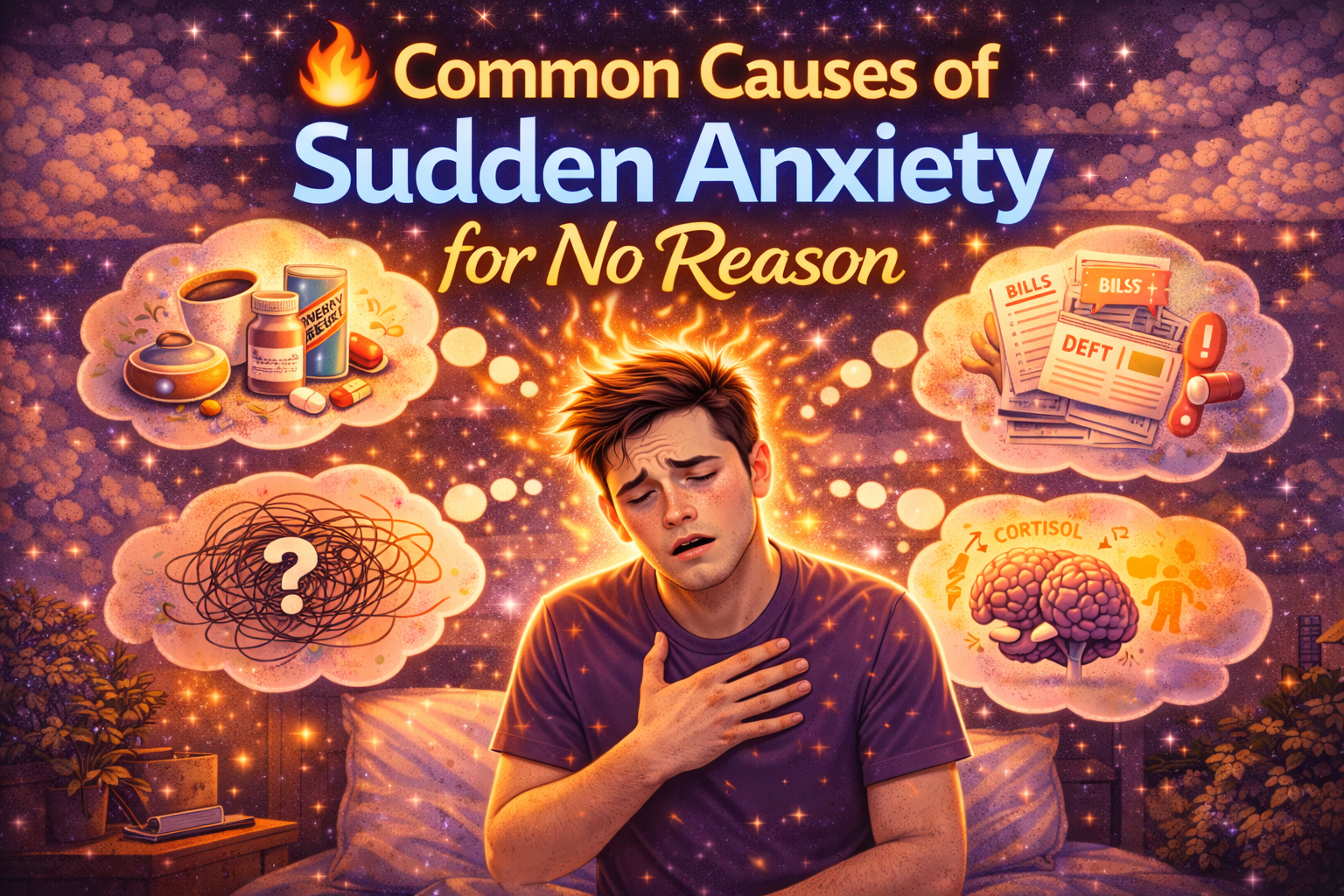
1. Hidden Stress Accumulation
Stress often builds gradually from:
- work pressure
- emotional tension
- overthinking
- lack of rest
Even if you feel “fine,” your nervous system may still be overloaded.
Related reading:
2. Overactive Nervous System
When your body stays in a constant stress-response state, small triggers can suddenly activate anxiety symptoms.
This may cause:
- rapid heartbeat
- dizziness
- chest tightness
- racing thoughts
3. Poor Sleep and Mental Fatigue
Sleep deprivation increases emotional sensitivity and stress reactivity.
Your brain becomes less capable of regulating anxious thoughts and physical symptoms.
Related reading:
4. Suppressed Emotions
Ignoring emotions for long periods can create internal mental pressure.
Your body may eventually release this pressure through sudden anxiety symptoms.
5. Excessive Caffeine or Stimulation
High stimulation from:
- caffeine
- energy drinks
- constant screen time
- social media overload
can increase nervous system activation significantly.
External reference:
https://www.apa.org/topics/stress
6. Fear-Based Thought Patterns
If your brain constantly scans for problems or danger, anxiety can activate automatically even in safe situations.
This often happens in people who:
- overthink frequently
- worry excessively
- replay situations mentally
🧠 Common Symptoms of Sudden Anxiety
- sudden nervousness
- chest tightness
- rapid heartbeat
- dizziness
- shaking
- restlessness
- feeling overwhelmed
🧘 How to Calm Sudden Anxiety Quickly

1. Slow Your Breathing Immediately
Try:
- inhale 4 seconds
- exhale slowly 6–8 seconds
This helps calm nervous system activity.
2. Ground Yourself Physically
Focus on physical sensations:
- touch a cold surface
- walk slowly
- stretch gently
- notice your surroundings
3. Stop Fighting the Feeling
Resisting anxiety can intensify it.
Instead:
acknowledge the feeling calmly and allow it to pass naturally.
4. Reduce Mental Stimulation
Avoid:
- doom scrolling
- stressful videos
- excessive multitasking
Your brain needs less stimulation to recover.
5. Create a Daily Nervous System Reset Routine
Consistency matters more than intensity.
Helpful habits include:
- better sleep
- hydration
- deep breathing
- quiet breaks during the day
🧠 When Sudden Anxiety Happens Frequently
If sudden anxiety keeps happening, your nervous system may be stuck in a chronic stress cycle.
Structured mental wellness systems can help reduce overload and calm repetitive anxiety patterns.
A guided program like the anxiety relief bundle includes:
- calming exercises
- printable mental reset checklists
- mindfulness routines
- structured stress reduction techniques
🔗 Related Articles
- why do I feel anxious for no reason
- how to stop overthinking simple situations
- why my mind won’t stop thinking at night
- how to calm racing thoughts before sleep
- why do I wake up feeling anxious
🌿 Conclusion – Sudden Anxiety for No Reason Causes
Sudden anxiety for no reason is usually connected to:
- hidden stress buildup
- nervous system overload
- poor sleep
- emotional suppression
- overthinking patterns
The goal is not to fear anxiety, but to calm your nervous system consistently and reduce mental overload over time.
With simple daily habits and structured calming techniques, sudden anxiety can become much easier to manage naturally.


