


How to Stop Negative Thoughts Naturally
Negative thoughts can quickly become mentally exhausting when they repeat constantly throughout the day. Many people struggle with intrusive thinking patterns that increase stress, anxiety, and emotional overwhelm.
You may notice:
- worst-case thinking
- constant self-criticism
- fear-based thoughts
- overanalyzing situations
- replaying problems repeatedly
- difficulty calming your mind
These thoughts often become stronger during periods of stress, anxiety, emotional exhaustion, or nervous system overload.
In this article, you’ll learn how to stop negative thoughts naturally and reduce repetitive thinking patterns in a healthier way.
🧠 Why Negative Thoughts Happen
Negative thinking is part of the brain’s natural survival system.
Simple explanation:
Your brain focuses on possible problems or dangers to protect you from future harm.
However, chronic stress and anxiety can make this system overactive.
External reference:
https://www.apa.org/topics/anxiety
🔥 Common Causes of Negative Thinking
1. Anxiety and Chronic Stress
Stress keeps the brain highly alert.
Your mind becomes more focused on:
- danger
- uncertainty
- mistakes
- future worries
- worst-case outcomes
This increases repetitive negative thinking.
Related reading:
2. Overthinking Habits
People who overanalyze situations often get trapped in repetitive mental loops.
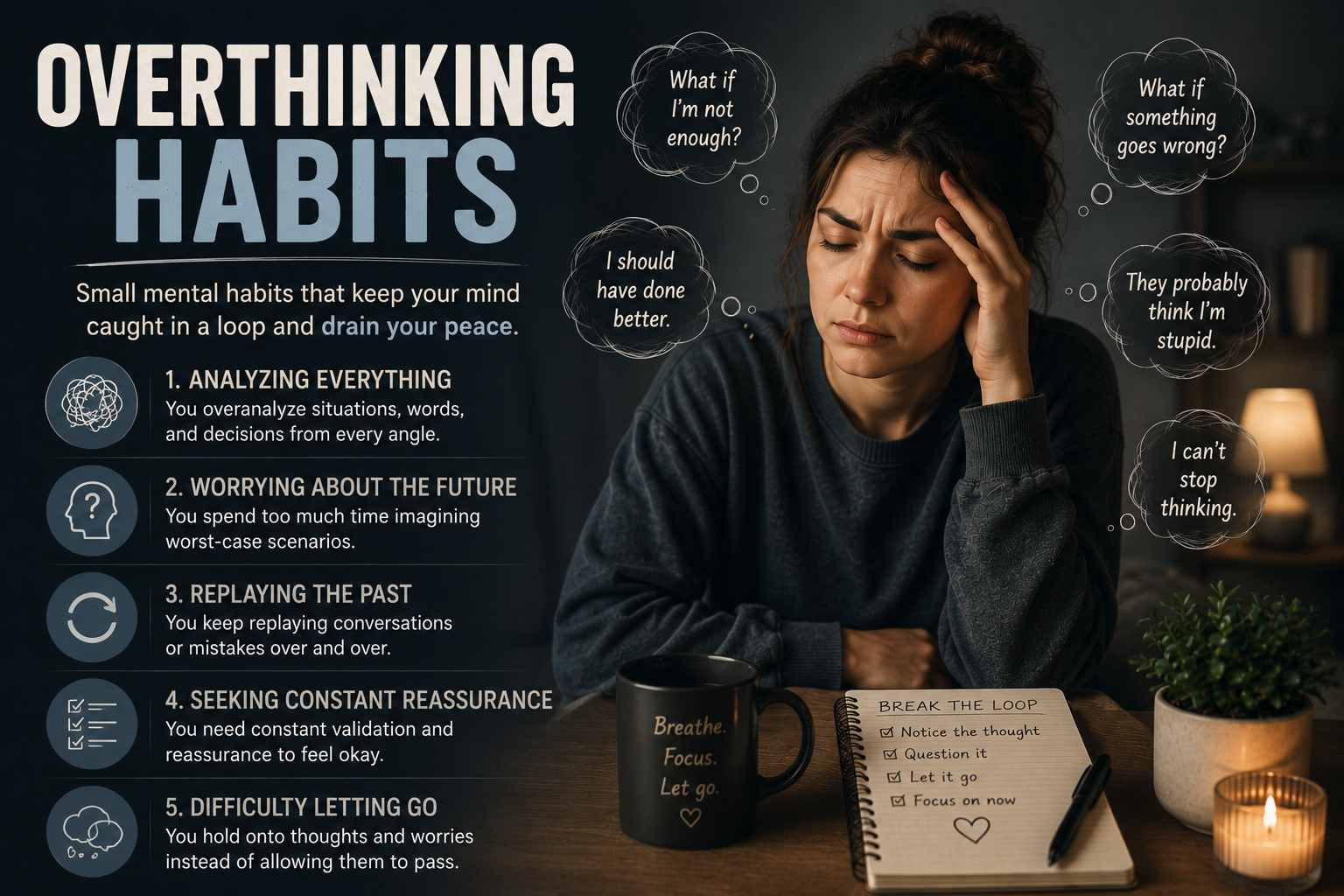
Your brain may continuously replay:
- conversations
- fears
- problems
- future scenarios
Related reading:
3. Mental Exhaustion
An exhausted brain struggles to process stress effectively.
Mental fatigue often increases:
- irritability
- emotional sensitivity
- negative thinking patterns
Related reading:
4. Low Emotional Recovery
When your nervous system lacks recovery time, negative thinking becomes stronger.
This commonly happens with:
- poor sleep
- overstimulation
- nonstop stress
- emotional overload
External reference:
https://www.sleepfoundation.org
5. Fear-Based Thinking Patterns
The brain naturally tries to predict problems before they happen.
Unfortunately, this can create constant fear-focused mental habits.
🧠 Signs Negative Thinking Is Becoming Excessive
- constant worrying
- repetitive thoughts
- self-criticism
- difficulty relaxing
- racing thoughts
- imagining worst-case scenarios
- emotional overwhelm
🧘 How to Stop Negative Thoughts Naturally
1. Stop Feeding the Thought Loop
The more attention you give negative thoughts, the stronger they become.

Instead of arguing with every thought:
notice it and redirect your focus calmly.
2. Reduce Mental Overload
An overstimulated brain produces more negative thinking.
Reduce:
- excessive scrolling
- multitasking
- nonstop information intake
- constant stress exposure
3. Calm Your Nervous System
Negative thinking increases when the body stays stressed.
Helpful calming habits:
- deep breathing
- walking
- mindfulness
- stretching
- quiet recovery time
Related reading:
4. Avoid Catastrophic Thinking
Ask yourself:
“Is this thought actually realistic, or is my anxiety exaggerating it?”
Many negative thoughts are fear-based predictions — not facts.
5. Improve Sleep and Recovery
Sleep is essential for emotional regulation and mental clarity.
Helpful habits include:
- consistent sleep schedule
- reduced screen time at night
- calming bedtime routines
🧠 Why Negative Thoughts Get Worse at Night
Negative thoughts often become stronger at night because the brain becomes quieter and more internally focused.
This can increase:
- overthinking
- emotional replay
- anxiety
- future worries
Related reading:
🧠 When Negative Thoughts Become Constant
If negative thinking affects:
- sleep
- relationships
- emotional health
- focus
- daily functioning
your nervous system may need deeper recovery support.
A structured system like the anxiety relief bundle includes:
- mindfulness exercises
- calming routines
- printable stress-reduction tools
- guided mental reset techniques
🔗 Internal Links – How to Stop Negative Thoughts Naturally
- how to stop worrying about everything
- why do I overthink every conversation
- mental exhaustion symptoms and recovery
- how to calm an overstimulated mind
- how to calm racing thoughts before sleep
🌿 Conclusion
Negative thoughts are commonly connected to:
- anxiety
- chronic stress
- overthinking
- nervous system overload
- emotional exhaustion
The goal is not to eliminate every negative thought instantly, but to reduce mental overload and stop reinforcing repetitive fear-based thinking.
With calmer routines and healthier recovery habits, your mind can gradually become quieter and more balanced naturally.

