


Why Do I Overthink Every Conversation?
Do you constantly replay conversations in your mind after they happen?
You may think about:
- what you said
- how you sounded
- whether someone judged you
- if you embarrassed yourself
- what you should have said differently
This pattern is extremely common, especially among people who struggle with anxiety, overthinking, perfectionism, or fear of judgment.
Overthinking conversations can become mentally exhausting because your brain keeps searching for mistakes, problems, or hidden meanings long after the interaction ends.
In this article, you’ll learn why you overthink every conversation and how to stop mentally replaying social interactions constantly.
🧠 Why Do People Overthink Conversations?
Conversation overthinking usually happens when your brain becomes overly focused on social evaluation and emotional self-monitoring.
Simple explanation:
Your mind keeps reviewing interactions because it wants to avoid rejection, embarrassment, or future mistakes.
External reference:
https://www.apa.org/topics/anxiety
🔥 Common Reasons You Overthink Every Conversation
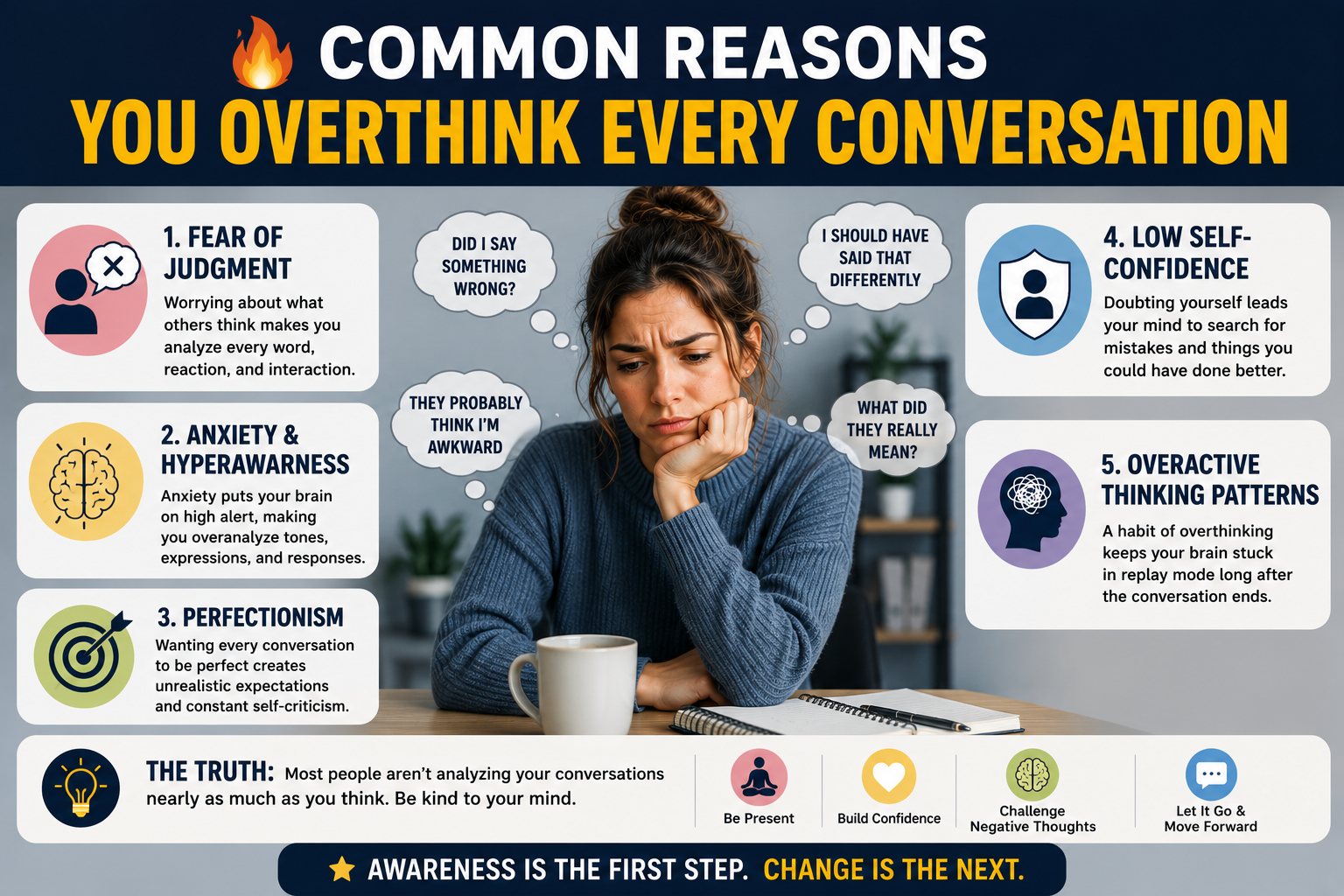
1. Fear of Judgment
One of the biggest causes of social overthinking is worrying about how others perceive you.
You may constantly ask yourself:
- “Did I sound awkward?”
- “Did I say something stupid?”
- “What if they misunderstood me?”
This keeps your brain stuck in replay mode.
2. Anxiety and Hyperawareness
Anxiety increases mental alertness and self-monitoring.
Your brain begins analyzing:
- tone of voice
- facial expressions
- word choices
- reactions from others
This creates excessive mental replay after conversations end.
Related reading:
3. Perfectionism
People who expect themselves to communicate perfectly often overanalyze normal conversations.
Small imperfections feel emotionally bigger than they actually are.
4. Low Self-Confidence
If you doubt yourself frequently, your brain may automatically search for social mistakes after interactions.
This can create:
- self-criticism
- embarrassment
- mental exhaustion
5. Overactive Thinking Patterns
People who naturally overthink tend to replay situations repeatedly.
Related reading:
External reference:
https://www.health.harvard.edu
🧠 Signs You Are Overthinking Conversations Too Much

- replaying conversations repeatedly
- analyzing tiny details
- worrying about others’ opinions
- feeling mentally exhausted afterward
- creating imaginary negative scenarios
- difficulty letting interactions go
🧘 How to Stop Overthinking Conversations
1. Stop Searching for “Perfect”
No conversation is perfect.
Most people are not analyzing your words nearly as much as you think.
2. Interrupt Mental Replay Quickly
When you notice replaying starting:
- redirect your focus
- move physically
- shift attention intentionally
The longer you replay, the stronger the loop becomes.
3. Avoid Mind Reading
You cannot accurately predict what others think about you.
Your brain often creates negative assumptions without evidence.
4. Reduce Self-Monitoring
Try focusing more on:
- listening
- connection
- being present
instead of constantly analyzing yourself during conversations.
5. Calm Your Nervous System
Social overthinking increases when your nervous system stays stressed.
Helpful habits include:
- deep breathing
- mindfulness
- proper sleep
- reduced overstimulation
Related reading:
🧠 Why Social Replay Happens More at Night
Many people replay conversations most intensely before sleep because the brain becomes quieter and more focused internally.
This often increases:
- anxious thinking
- embarrassment replay
- overanalysis loops
Related reading:
🧠 When Conversation Overthinking Becomes Constant
If you replay conversations daily, your brain may be stuck in a repetitive anxiety-response cycle.
Structured mental wellness systems can help reduce overthinking and emotional overload.
A guided program like the anxiety relief bundle includes:
- calming exercises
- mindfulness techniques
- mental reset routines
- stress reduction checklists
🔗 Related Articles
- why do I keep replaying conversations in my head
- how to stop overthinking simple situations
- why my mind won’t stop thinking at night
- how to stop worrying about everything
- mental exhaustion symptoms and recovery
🌿 Conclusion – Why Do I Overthink Every Conversation
Overthinking every conversation is usually caused by:
- fear of judgment
- anxiety
- perfectionism
- low self-confidence
- repetitive thinking patterns
The goal is not to analyze yourself perfectly, but to reduce unnecessary mental replay and calm your nervous system consistently.
With practice and healthier thinking habits, social overthinking can become much easier to manage naturally.


4 Comments
Comments are closed.