


Mental Exhaustion Symptoms and Recovery
Mental exhaustion can affect your thoughts, emotions, energy, focus, and overall daily functioning. When stress builds up for too long without proper recovery, the brain and nervous system eventually become overwhelmed.
You may notice:
- constant fatigue
- emotional numbness
- racing thoughts
- difficulty concentrating
- irritability
- lack of motivation
- feeling mentally drained all the time
Many people ignore these signs until stress begins affecting sleep, relationships, work performance, and emotional health.
In this article, you’ll learn the most common mental exhaustion symptoms and practical ways to recover naturally.
🧠 What Is Mental Exhaustion?
Mental exhaustion happens when prolonged stress overloads your brain and nervous system.
Simple explanation:
Your mind becomes overworked emotionally and mentally without enough time to recover properly.
External reference:
https://www.apa.org/topics/stress
🔥 Common Causes of Mental Exhaustion
1. Chronic Stress
Constant stress keeps your brain in continuous alert mode.
Over time, this drains emotional and mental energy significantly.
Related reading:
2. Overthinking and Mental Overload
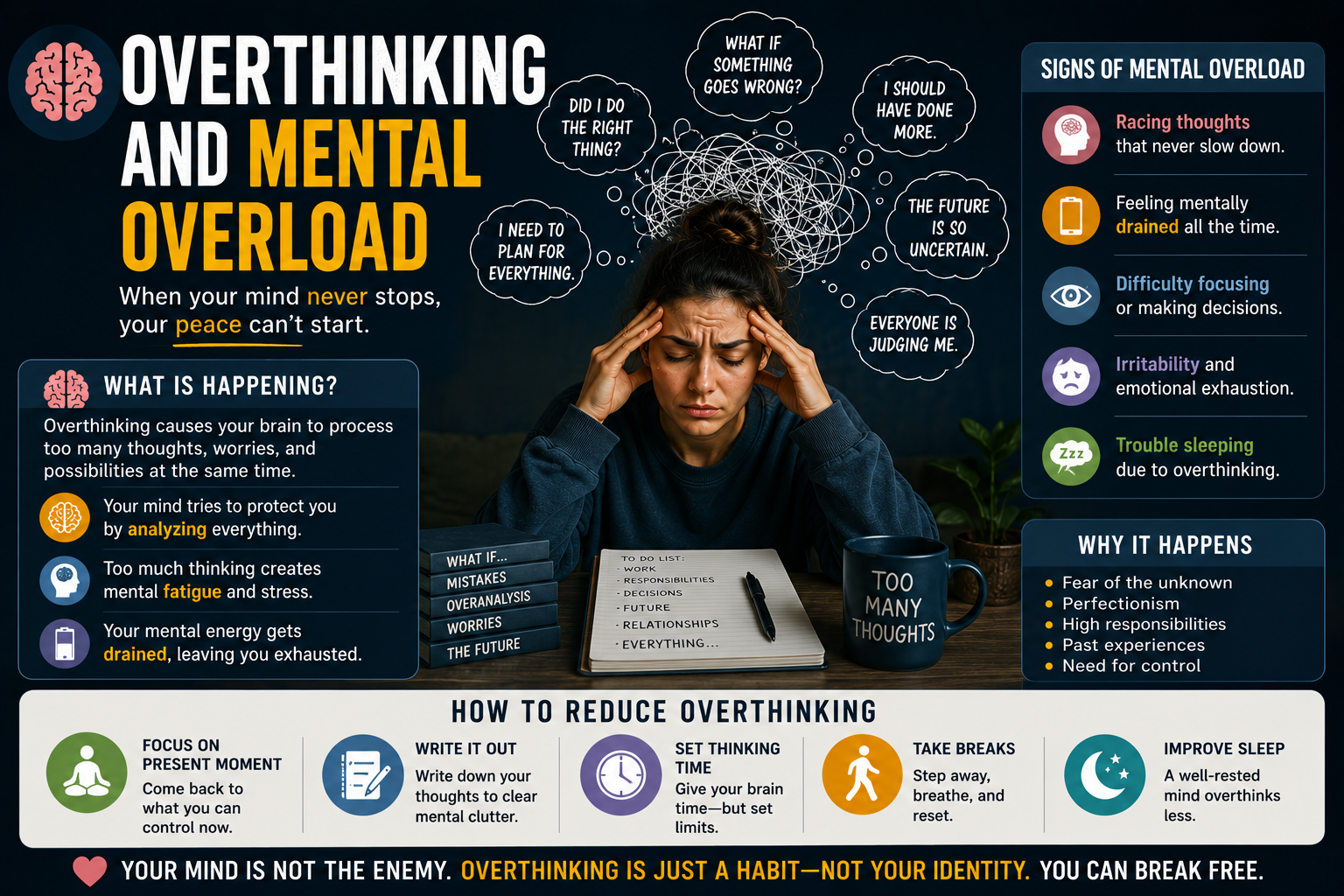
Constant thinking and worrying exhaust the brain.
Your mind may continuously process:
- future fears
- responsibilities
- conversations
- problems
- emotional pressure
Related reading:
3. Poor Sleep Quality
Sleep is essential for nervous system recovery.
Without proper rest, mental fatigue becomes worse quickly.
External reference:
https://www.sleepfoundation.org
4. Emotional Burnout
Long-term emotional pressure can create deep exhaustion.
This often happens from:
- work stress
- caregiving
- anxiety
- constant pressure
- emotional overload
5. Lack of Recovery Time
Many people stay mentally stimulated all day without giving their brain real recovery periods.
Constant:
- screen time
- multitasking
- notifications
- information overload
can increase exhaustion rapidly.
🧠 Symptoms of Mental Exhaustion
Emotional Symptoms
- irritability
- emotional numbness
- anxiety
- feeling overwhelmed
- low motivation
Mental Symptoms
- racing thoughts
- poor concentration
- forgetfulness
- overthinking
- difficulty making decisions
Physical Symptoms
- fatigue
- headaches
- sleep problems
- muscle tension
- low energy
🧘 How to Recover From Mental Exhaustion

1. Reduce Mental Stimulation
Your brain needs periods of reduced input to recover properly.
Try reducing:
- excessive scrolling
- constant multitasking
- nonstop notifications
- information overload
2. Improve Sleep Recovery
Quality sleep is one of the biggest factors in nervous system healing.
Helpful habits include:
- consistent sleep schedule
- less screen time before bed
- calming nighttime routines
Related reading:
3. Stop Overloading Yourself Mentally
You do not need to solve every problem immediately.
Focus on:
- one task at a time
- realistic expectations
- mental pacing
4. Give Your Nervous System Quiet Time
Intentional quiet periods help the brain recover.
Helpful activities:
- walking
- deep breathing
- stretching
- mindfulness
- quiet environments
5. Create Emotional Recovery Habits
Recovery is not just physical — emotional recovery matters too.
Helpful habits include:
- journaling
- emotional expression
- healthy boundaries
- reducing pressure
🧠 Why Mental Exhaustion Can Feel Like Anxiety
Mental exhaustion often increases nervous system sensitivity.
This may create:
- racing thoughts
- restlessness
- emotional tension
- stress reactions
even when there is no immediate danger.
Related reading:
🧠 When Mental Exhaustion Becomes Severe
If exhaustion starts affecting:
- sleep
- relationships
- emotional stability
- focus
- daily functioning
your nervous system may need deeper recovery support.
A structured system like the anxiety relief bundle includes:
- calming exercises
- guided mindfulness routines
- printable stress-reduction tools
- mental reset techniques
🔗 Read More Related To – Mental Exhaustion Symptoms and Recovery
- how to stop worrying about everything
- why can’t I relax even when nothing is wrong
- how to calm down when overwhelmed at work
- why do I overthink every conversation
- how to calm racing thoughts before sleep
🌿 Conclusion
Mental exhaustion is usually caused by:
- chronic stress
- overthinking
- emotional overload
- poor sleep
- lack of recovery time
The goal is not to become productive constantly, but to give your nervous system enough recovery to function properly again.
With healthier habits, reduced mental overload, and consistent recovery routines, emotional and mental energy can gradually return naturally.


7 Comments
Comments are closed.