


Why Can’t I Relax Even When Nothing Is Wrong?
Do you ever feel mentally tense, anxious, or emotionally restless even when nothing bad is happening?
You may notice:
- constant tension
- racing thoughts
- difficulty sitting still
- inability to fully relax
- feeling “on edge” all the time
Many people experience this without understanding why. Even during calm moments, the nervous system can remain stuck in stress-response mode after prolonged anxiety, overthinking, or emotional exhaustion.
In this article, you’ll learn why you can’t relax even when nothing is wrong and how to calm your mind and body naturally.
🧠 Why Relaxing Feels Difficult Sometimes
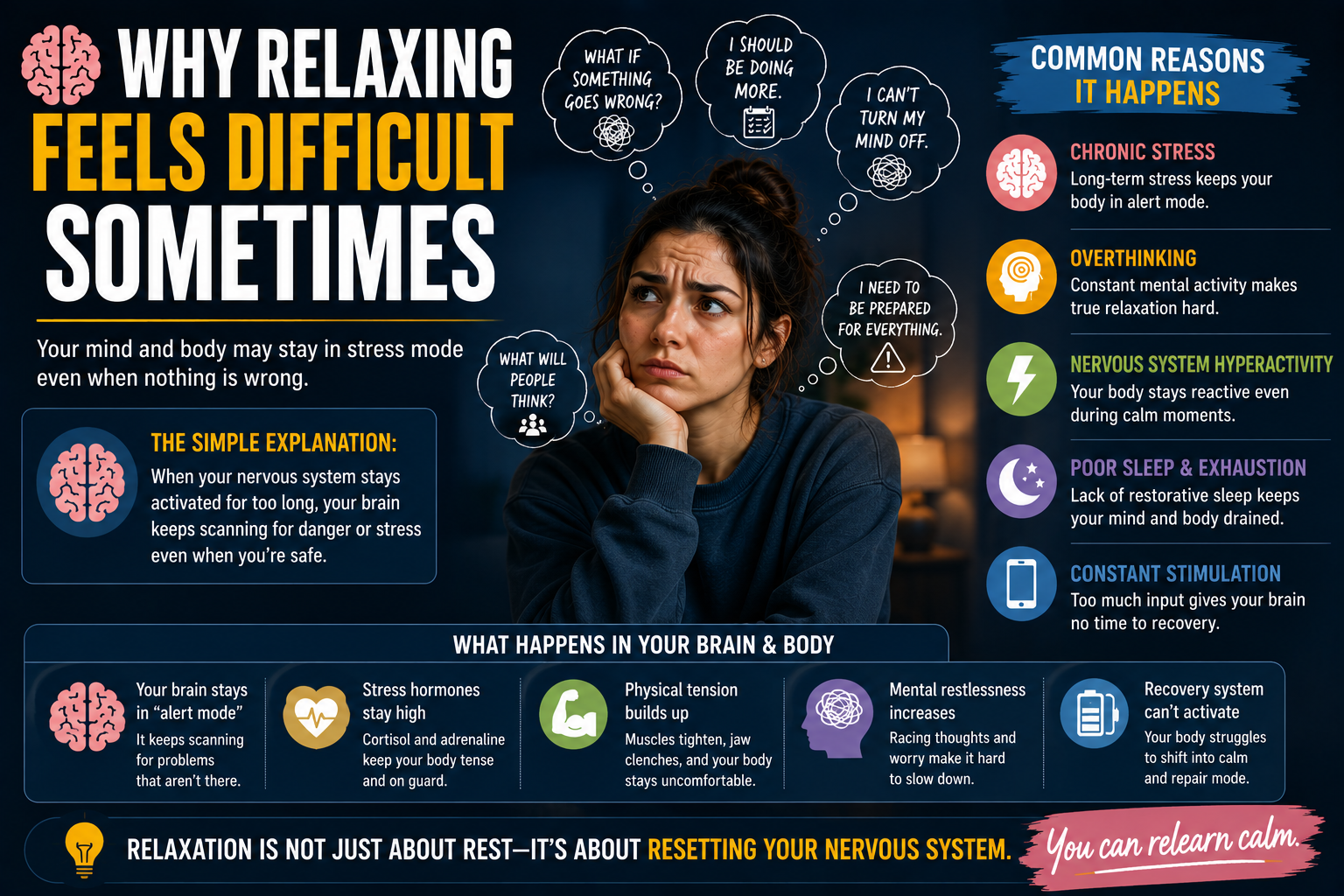
Relaxation becomes difficult when your nervous system stays activated for too long.
Simple explanation:
Your brain continues scanning for danger or stress even when your environment is safe.
External reference:
https://www.apa.org/topics/stress
🔥 Common Reasons You Can’t Relax
1. Chronic Stress Mode
Long-term stress trains your nervous system to stay alert constantly.
Even after stress decreases, your body may continue operating as if danger still exists.
This can cause:
- mental tension
- restlessness
- emotional fatigue
- hyperawareness
Related reading:
2. Anxiety and Overthinking
Anxiety keeps your brain highly active.
Your mind may constantly search for:
- future problems
- possible mistakes
- uncertainty
- worst-case scenarios
This makes genuine relaxation difficult.
Related reading:
3. Nervous System Hyperactivity
When stress hormones remain elevated, your body struggles to shift into recovery mode.
You may feel:
- physically tense
- mentally restless
- emotionally overstimulated
even during quiet moments.
4. Poor Sleep and Mental Exhaustion
Sleep problems reduce your brain’s ability to recover from stress properly.
This often increases:
- emotional sensitivity
- racing thoughts
- stress activation
- difficulty relaxing
External reference:
https://www.sleepfoundation.org
5. Constant Stimulation
Modern lifestyles overload the brain with nonstop input:
- social media
- notifications
- multitasking
- screens
- mental pressure
Your nervous system rarely gets true recovery time.
🧠 Signs Your Nervous System Is Overloaded
- feeling constantly “on edge”
- racing thoughts
- inability to sit calmly
- irritability
- emotional exhaustion
- trouble sleeping
- muscle tension
🧘 How to Relax When Your Mind Won’t Calm Down
1. Reduce Mental Stimulation
Your brain relaxes better with less input.
Temporarily reduce:
- social media
- excessive scrolling
- multitasking
- constant notifications
2. Slow Your Breathing
Deep breathing helps signal safety to your nervous system.
Try:
- inhale slowly for 4 seconds
- exhale slowly for 6–8 seconds
This activates calming responses in the body.
3. Stop Trying to “Force” Relaxation
Many people become anxious because they cannot relax instantly.

Ironically, forcing relaxation creates more tension.
Instead:
allow your body to calm gradually.
4. Move Your Body Gently
Light movement reduces nervous system tension.
Helpful options:
- walking
- stretching
- yoga
- slow breathing exercises
5. Create Quiet Recovery Time Daily
Your nervous system needs intentional recovery periods.
Helpful habits include:
- quiet mornings
- less screen time
- mindfulness
- journaling
- proper sleep routines
Related reading:
🧠 Why Relaxation Feels Uncomfortable for Some People
People who stay stressed for long periods often become psychologically accustomed to tension and hyperalertness.
When things finally become quiet, the brain may feel uncomfortable because it is unfamiliar with calmness.
This is common in people dealing with:
- chronic stress
- anxiety
- emotional burnout
- constant mental pressure
🧠 When You Constantly Feel Unable to Relax
If relaxation feels impossible most days, your nervous system may need structured recovery support.
A guided system like the anxiety relief bundle includes:
- calming exercises
- mindfulness routines
- printable stress-reduction tools
- guided mental reset techniques
🔗 More Articles – Why Can’t I Relax Even When Nothing Is Wrong
- how to stop worrying about everything
- why do I feel overwhelmed all of a sudden
- mental exhaustion symptoms and recovery
- how to calm racing thoughts before sleep
- how to stop overthinking simple situations
🌿 Conclusion
Feeling unable to relax is usually connected to:
- chronic stress
- anxiety
- nervous system overload
- overthinking
- emotional exhaustion
The goal is not to force calmness instantly, but to consistently reduce stress activation and give your nervous system time to recover.
With healthier recovery habits and calming routines, relaxation becomes easier and more natural over time.


6 Comments
Comments are closed.